 NEWS
Robotics · Robotics
Nomadic: The cheapest new power line is the old one you measure
Munich-based Nomadic lands drones on live high-voltage lines, charges them there and measures what each line can really carry. It has just raised $6m to do it, and what it is really selling is not drones but knowledge of the grid.
Researched and drafted with AI support, directed and edited by Manfred Lugmayr; facts checked against the sources. How we work
In 2025 Germany paid around €3.08bn because electricity could not get where it needed to go. That figure comes from the federal government's answer to a parliamentary question from the Greens, as reported by the Bundestag, Germany's parliament. The industry calls it congestion management: fire up power plants here, switch off wind farms there, because the lines in between are full.
Now a Munich startup says many of those lines are not actually full. Nobody has measured them.
What happened
Nomadic has closed a $6m seed round led by Berlin-based Foundamental, with Verve Ventures and Cyan Ventures joining existing backers Outlander VC and Asia2G Capital, Tech.eu reports. According to Norwegian outlet Shifter, the founders, CEO Andreas Moldskred (Norwegian) and CTO Lauritz Weil (German), met at UC Berkeley. The company is now headquartered in Munich and raised a $1.6m pre-seed in 2025.
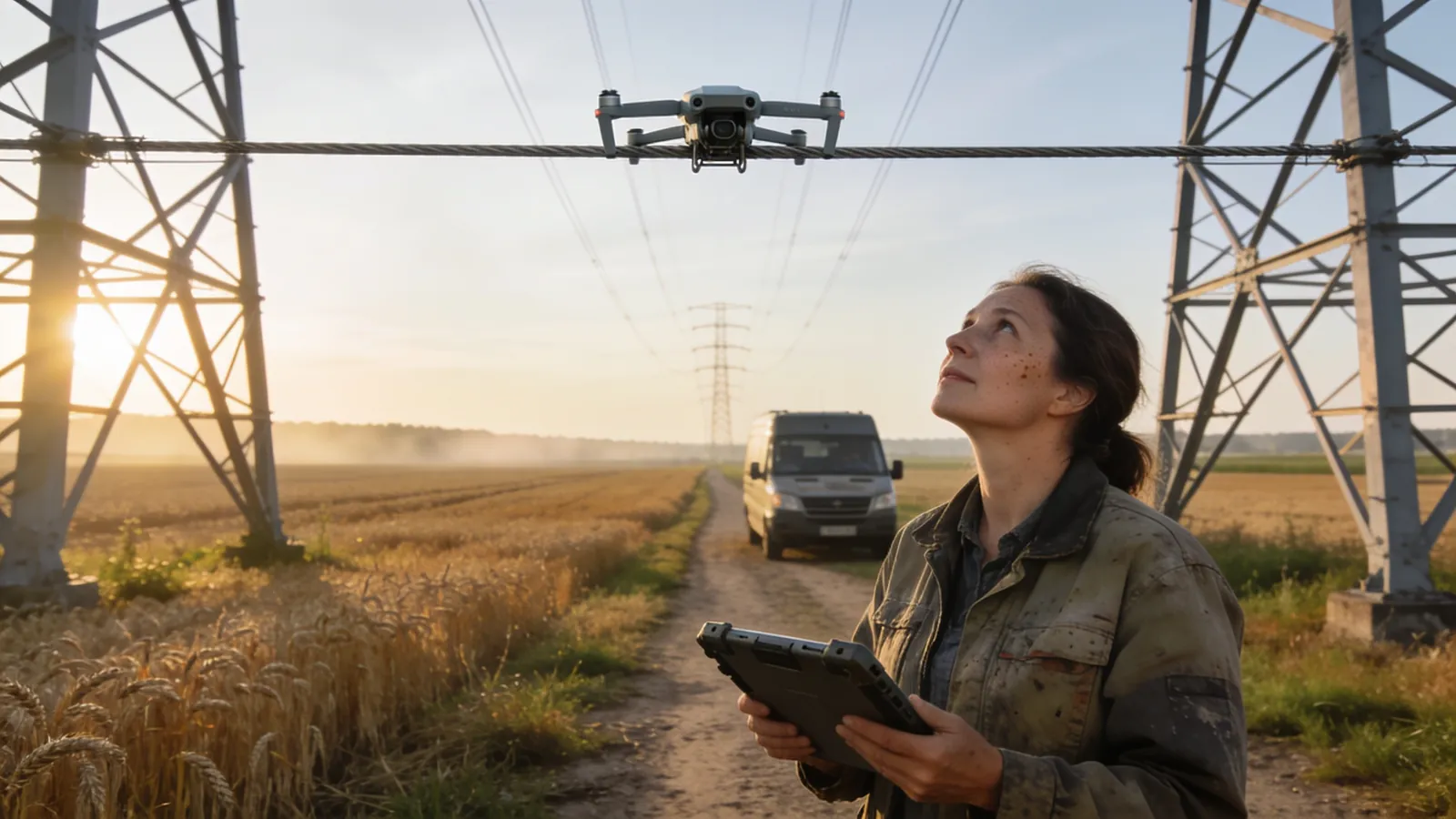
The product, all according to the company: a drone of roughly 4kg lands on a live line, with no outage needed, and charges inductively from the line's magnetic field. Once docked it measures conductor temperature, sag, current and vibration. Nomadic says one drone covers about 25km of line, while fixed sensors are typically installed every 1 to 5km. It claims more than 20,000 hours on live lines, operation down to -25°C and voltages up to 420kV. Its first pilot customer, per Dealroom, was Westnetz, a German distribution grid operator.
The drone is the vehicle. Capacity is the product
It sounds like an inspection gadget. It isn't. The interesting part is dynamic line rating. Grid operators usually calculate a line's limit from cautious weather assumptions. Measure how hot the conductor actually runs and, on a cold, windy day, you can push more power through it. On its own site Nomadic talks of 15–30% more power through existing lines. That is the company's claim, not an independent test.
Put simply: the cheapest new power line is the old one, once you measure it. That is the second-order point for me. Data centres, heat pumps and charging hubs across Germany, Austria and Switzerland are queuing for grid connections. Whoever frees up capacity in hours rather than years is not selling drones. They are selling time.
What a bolted-on sensor can't do
My rule of thumb for AI products: value sits where something watches continuously, remembers the history and acts. Everything else a rival copies in a week. Nomadic is a good example from physical AI. The drone watches around the clock, Nomadic OS combines its readings with weather models, grid data and history, and the drone moves on when the bottleneck shifts.
In the release, Moldskred calls this the “physical context layer” for the power grid. Translation: the hardware gets you in the door, the data keeps you there. Once you hold years of readings on a utility's lines, you are hard to replace. That is the moat, not the propellers.
Investors should also note Moldskred's line to Shifter (translated): this time the backers are European, last time they were mostly American. A counterexample to the pattern we described today in Plural's €1bn fund.
The catch
Utilities buy slowly. A pilot is not a fleet, and Dealroom asks exactly that: can Nomadic turn pilots into reliable operations and win flight approvals in several countries? Remote relocation of drones between line sections is only due to go into production with customers in 2027. Until then, pilots on site are needed. And $6m is not much for hardware with customers in Germany, Norway and the US. The next round will probably have to be bigger.
What I would do now
- Grid operators: Take your ten most expensive congested stretches and measure them before you decide on the next build-out. You are paying for redispatch anyway.
- Robotics investors: Ask every hardware company which data product will still be standing in five years, once the hardware has been copied.
- Data centre and industrial projects: When you apply for a grid connection, ask whether the operator measures its lines or calculates them. The difference can decide your timeline.
More rounds from the region are in our funding tracker, and more robotics in our piece on hands for humanoids.
Bottom line: Nomadic isn't selling drones, it is selling spare grid capacity, and right now that is the scarcest commodity in Germany's power grid.
The facts
- Munich-based Nomadic closed a $6m seed round led by Foundamental.
- Other investors: Verve Ventures, Cyan Ventures, Outlander VC, Asia2G Capital and angels.
- The drones land on lines up to 420kV, charge inductively and have logged over 20,000 hours, per the company.
- Grid congestion management cost Germany around €3.08bn in 2025, per the federal government.
Questions and answers
What does Nomadic do?
Munich-based Nomadic builds drones that land on live high-voltage power lines, charge inductively from them and measure conductor temperature, sag, current and vibration. Its Nomadic OS software analyses the data.
How much has Nomadic raised?
$6m in a seed round led by Foundamental in November 2026, after a $1.6m pre-seed in 2025.
What is dynamic line rating?
Calculating a power line's capacity from real measurements instead of cautious weather assumptions, so more electricity can flow through existing lines when conditions allow.
Sources
- Nomadic (Unternehmen): Nomadic raises $6M Seed for drones that charge on live power lines (17 Nov 2026) primary source
- Nomadic (Produktseite): Dynamic Line Rating (17 Nov 2026) primary source
- Deutscher Bundestag (hib 689/2026): Kosten für das Netzengpassmanagement 2024 und 2025 (7 Sep 2026) primary source
- Tech.eu: Nomadic bags $6M to deploy self-charging drones that spot weak points in power grids (17 Nov 2026) independent source
- Dealroom: Nomadic Drones raises $6M for self-charging power-line drones (17 Nov 2026) independent source
- Shifter: Nær 60 millioner til selvladende droner (17 Nov 2026) independent source