 NEWS
AI · Acquisition
Indivi buys Imperial College spin-out Cogitat for its EEG foundation model
Basel-based neurotech company Indivi has acquired Cogitat, an Imperial College London spin-out that builds AI models to decode brain activity from electroencephalography (EEG) signals, the two companies announced on 17 November. They did not disclose the price. Indivi says it plans to use Cogitat's foundation model, NeuroRVQ, to detect earlier whether experimental Alzheimer's drugs are working in clinical trials.
Researched and drafted with AI support, directed and edited by Manfred Lugmayr; facts checked against the sources. How we work
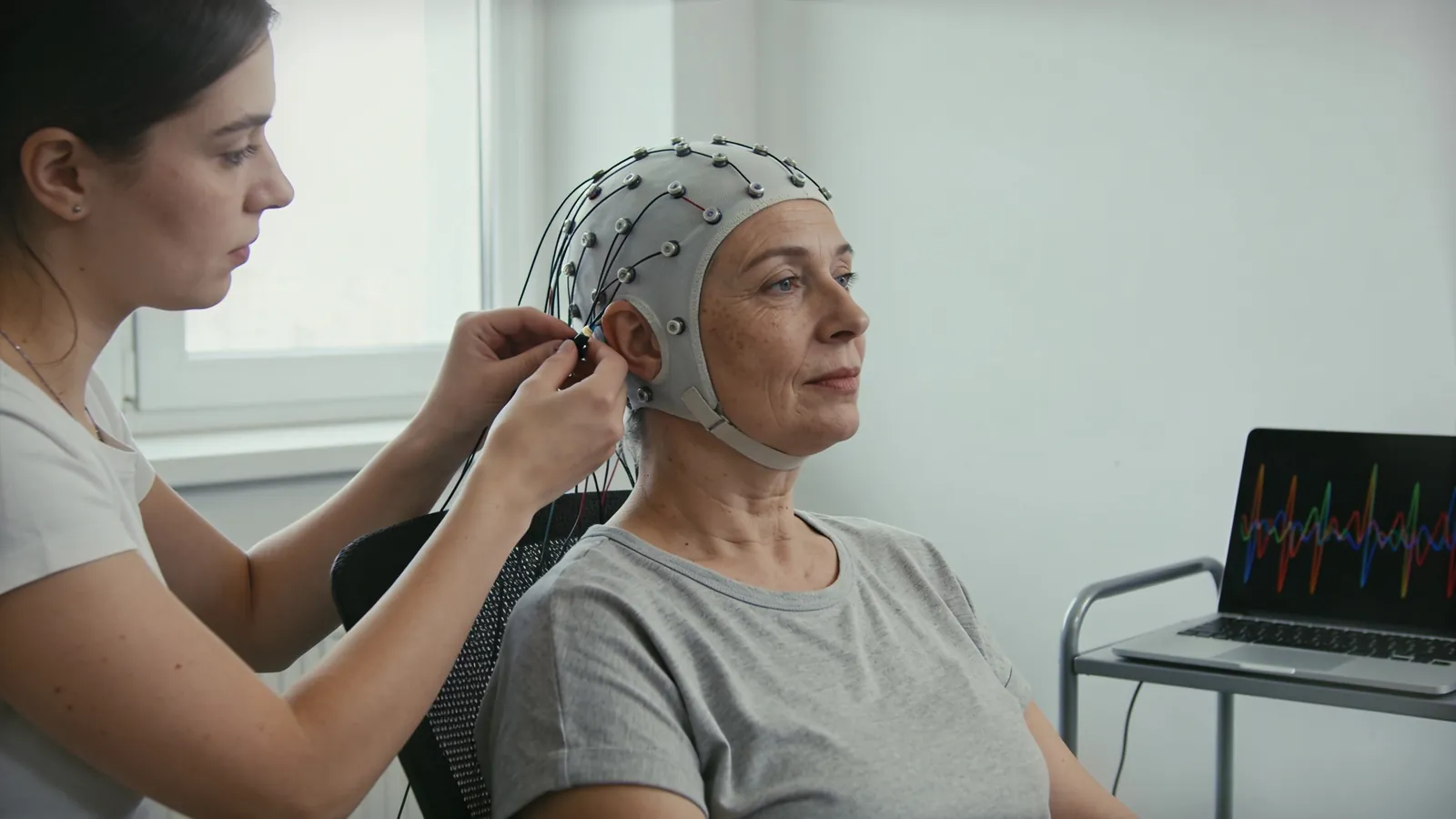
Cogitat develops deep learning models that read cognitive function from EEG data, according to a joint press release. Its core asset is NeuroRVQ, a foundation model for brainwave data that the companies say is designed to work for any person and on any EEG device without retraining for each individual. The stated goal is to do “for the brain what large language models do for language”. Indivi will keep developing the model with Cogitat's team, the companies said. The companies gave no details of the deal structure or headcount, and coverage by Tech.eu and Swiss outlet Startupticker added no figures.
“This acquisition marks a new chapter for Indivi as a neuroscience-based AI company,” Guilhem Dupont, Indivi's founder and chief executive, said in the release. In the near term, he said, the model could give drug developers earlier data on how treatments for brain conditions are working; in the longer run it could feed into brain health products beyond the life sciences, including consumer applications. Cogitat co-founder and chief executive Allan Ponniah said in the release that the model picks up subtle changes in brain activity that were previously hard to identify, and that Indivi gives the team a route to test it in real-world use.
What the model is meant to do
According to the release, NeuroRVQ keeps the short, fast-changing patterns in brain signals that other models discard. The underlying paper, which describes a method for tokenising biosignals, has been on arXiv since October 2025 and is now in its fifth version, dated 7 November 2026. The authors, led by Konstantinos Barmpas and Stefanos Zafeiriou, a professor of machine learning at Imperial, report “competitive or superior” results against existing foundation models built for each signal type. The authors say the work will be presented at NeurIPS, the AI research conference, which runs from 6 to 12 December. The companies say the team also won the BEETL competition on transferable EEG models at NeurIPS 2021.
The companies cite no clinical evidence yet that the model improves Alzheimer's trials. Indivi's own wording is cautious: the model could “potentially” help detect early effects of experimental treatments and, “over time”, sharpen clinical trials.
Who Indivi is
Indivi is headquartered in Basel, Switzerland, with offices in Córdoba, Spain, and Boston. It offers smartphone-based motor and cognitive assessments which, it says, let pharmaceutical companies run smaller early-stage trials in Parkinson's disease, multiple sclerosis, neuromuscular disorders and Alzheimer's. In November 2025 it raised CHF 15m in a round led by Ava Investors, Pulse 2.0 reported, to fund a 2026 proof-of-concept study looking for biomarkers for therapies that clear beta-amyloid. Indivi is also listed on the portfolio page of the Infosys Innovation Fund. Cogitat was founded by Ponniah, chief technology officer Dimitrios Adamos and Zafeiriou.
More AI news from Germany, Austria and Switzerland is collected in the AI section, and the region's venture rounds are tracked on the funding tracker.
Analysis
Indivi is mainly buying a team and a model that have performed well in a preprint and a competition, but not yet in a regulatory-grade trial. What Indivi brings is a line to drugmakers, to which it says it already offers smartphone tests for early-stage trials. For a university spin-out, that access is likely harder to win than a good model. Several research groups are now building foundation models for biosignals, as the comparison in the arXiv paper itself shows.
What matters is whether EEG measurements pick up treatment effects measurably earlier than established assessments. Indivi has not said whether its planned 2026 proof-of-concept study uses EEG. Only with such data will drugmakers have a reason to pay for EEG as a trial measure. Indivi's talk of consumer products is, for now, an aspiration rather than a plan with numbers. Until trial data arrive, the deal's value depends on whether Indivi can turn the London research into paid studies faster than Cogitat could have on its own.
The facts
- Basel-based Indivi announced on 17 November that it has acquired Cogitat, an Imperial College London spin-out.
- Neither company disclosed the price or the structure of the deal.
- Cogitat's EEG foundation model NeuroRVQ is designed to work across people and devices without per-person training.
- The NeuroRVQ paper will be presented at NeurIPS, which runs from 6 to 12 December 2026.
- Indivi raised CHF 15m in November 2025 in a round led by Ava Investors, Pulse 2.0 reported.
Questions and answers
How much did Indivi pay for Cogitat?
Neither Indivi nor Cogitat disclosed the price or the deal structure.
What is NeuroRVQ?
NeuroRVQ is an AI foundation model for biosignals such as EEG, developed by researchers at Imperial College London. According to the paper's title, it breaks signals into tokens that models can learn patterns from. The paper will be presented at NeurIPS in December 2026.
What will Indivi use the model for?
First in clinical trials, where EEG data is meant to show earlier whether experimental Alzheimer's treatments are working. The companies have not cited clinical proof of that yet.
Sources
- Indivi und Cogitat (press release): Indivi acquires Imperial College’s Cogitat and its brain-decoding AI models (17 Nov 2026) primary source
- arXiv (Barmpas et al.): NeuroRVQ: Multi-Scale Biosignal Tokenization for Generative Foundation Models (7 Nov 2026) primary source
- Tech.eu: Swiss neurotech company Indivi acquires Imperial College spin-out Cogitat to advance AI-powered brain monitoring (17 Nov 2026) independent source
- Startupticker: Indivi strengthens AI capabilities for brain analysis with Cogitat acquisition (17 Nov 2026) independent source
- Pulse 2.0: Indivi: CHF15 Million Secured To Advance Biomarker Discovery In Alzheimer’s Drug Development (12 Nov 2025) independent source
- Infosys Innovation Fund: Portfolio (18 Nov 2026) primary source