 NEWS
Capital · Policy
Germany cuts its cheapest startup lever, the INVEST angel grant
Germany's government plans to cut INVEST, its grant for business angels, from around €44m to €30m in 2027. The awkward part: an evaluation commissioned by the economics ministry itself found in August that the programme beat all its targets, and advised against cutting the grant any further.
Researched and drafted with AI support, directed and edited by Manfred Lugmayr; facts checked against the sources. How we work
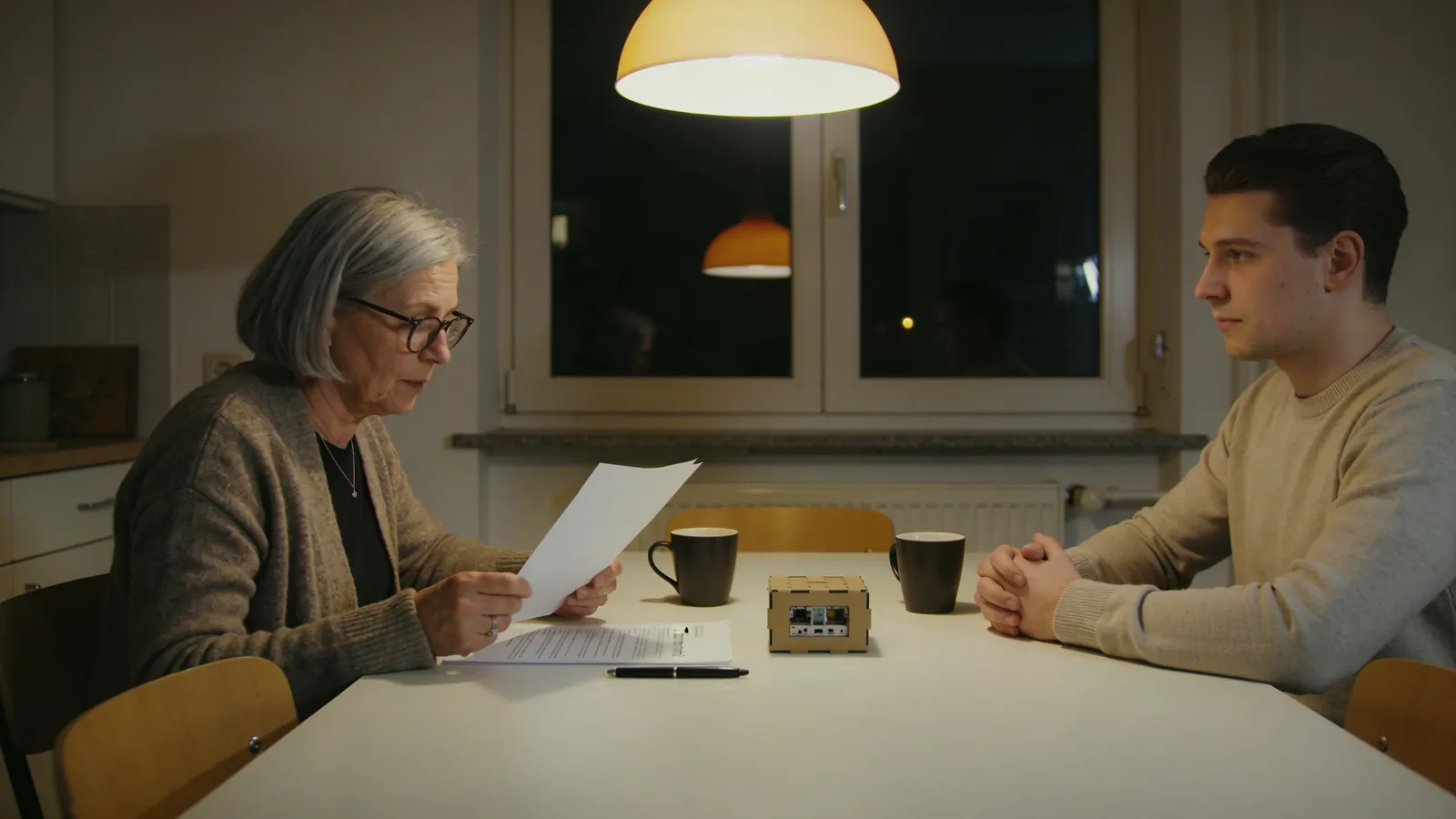
Anyone who has run a marketing budget knows the pattern. Money gets tight, and the first thing to go is the top of the funnel. The part whose effect won't show up on tomorrow's dashboard. That is exactly what is happening to angel money in Germany right now.
And this time nobody can say they didn't know.
What happened
INVEST is the programme through which Germany's federal government has subsidised private investors backing young companies since 2013. Buy shares in an eligible startup and you currently get 15% of the ticket back as a grant, capped at €100,000 per person over a lifetime. According to Börsen-Zeitung, Germany's financial daily, the pot holds around €44m this year and just €30m in the government's draft for 2027. That is almost a third less. The Bundestag budget committee signed off the 2027 budget overnight into Friday; the opposition Greens want €74m. Bitkom, the German digital industry association, says demand already exceeds the money available.
For contrast, EXIST, the programme for university spin-offs, rises from around €102m to €113.5m in the same budget. So this isn't a cut to startups in general. It is a cut in one specific place.
The ministry's own evaluation says the opposite
The timing is the story. On 3 August the economics ministry published an evaluation of INVEST (in German) by the BF/M research centre in Bayreuth, covering 2013 to mid-2025. A few numbers:
- All four performance indicators meet or beat their targets, including more than 390 first-time angels a year, nearly four times the goal.
- Every €1 of grant mobilises €1.94 of additional private capital, based on investor surveys.
- 38.9% of funded startups go on to raise institutional venture capital, against 10.7% for their statistical twins.
- Administration costs run at 4.1% to 5.4% of the grant volume.
The authors recommend keeping the grant at 15% and write that their analysis argues against a further reduction. To be fair, that refers to the grant rate, not the size of the pot. But at the same rate, a smaller pot simply means fewer grants approved.
Cutting the top of the funnel
My rule of thumb after 30 years in marketing: performance harvests demand, brand creates it. Harvest only, and one day there is nothing left in the field. Startup finance works the same way. Angels sit at the top of the funnel. They back the companies that a fund such as redalpine, with state development bank KfW among its investors, looks at for a Series A three years later.
The state is strengthening the later stages: fund commitments through KfW Capital, large rounds, scale-ups. And it is trimming the stage that feeds them deals. The evaluation puts Germany's early-stage funding gap for 2015 to 2023 at around 46%, roughly €640,000 per startup on average.
Rough maths, purely arithmetic and ignoring the exit grant: €44m at 15% covers just under €300m of angel investment, €30m around €200m. Apply the 1.94 from the evaluation and roughly €27m of additional capital goes missing, still about €13m of private money after netting out the grant. Every year. To save €14m.
The catch
It isn't that clean. The evaluators also document deadweight: about a third of angels would have invested anyway, 37.1% among experienced ones. And 71% of investors only ever file one application. So some of the money goes to people who would have written the cheque regardless. That is a case for a sharper programme, not a smaller one. Investor applications take a median 77 days to process, and peaked at 208 days in 2023. That scares off first-timers, and fixing it costs process, not money.
One more thing: the current guideline was extended in 2023 until 31 December 2026, so the next version will be negotiated around the smaller pot.
What I would do now
- Founders: apply for the INVEST eligibility certificate now, not once an angel commits. Two thirds of funded companies said it helped them find investors, and so did almost half of those that never got a grant in the end.
- Angels: don't push planned cheques into 2027 if the pot is smaller then. Whether applications will have to wait is unclear.
- Associations and investors: argue with the ministry's own evaluation, not with appeals. The numbers are already on its desk.
To follow the rounds these angel deals turn into, see our funding tracker and the capital section.
Bottom line: cut the angels and you save €14m today, then pay for it with the missing Series A rounds of 2030.
The facts
- INVEST budget: around €44m in 2026, €30m in the government's 2027 draft (Börsen-Zeitung, 15 November 2026).
- Evaluation (BF/M, 3 August 2026): all four targets met; €1 of grant mobilises €1.94 of extra private capital.
- 38.9% of funded startups later raise VC, against 10.7% of statistical twins.
- The acquisition grant has been 15% since 6 March 2024, capped at €100,000 per person.
- EXIST spin-off funding rises from around €102m to €113.5m in 2027.
Questions and answers
What is Germany's INVEST grant?
A federal grant for private investors in young innovative companies with a presence in Germany. Investors get 15% of their ticket back, with a minimum investment of €10,000 and a lifetime cap of €100,000 in grants, plus an exit grant on capital gains.
How much is INVEST being cut?
According to Börsen-Zeitung, the government's 2027 draft budget sets aside about €30m, down from around €44m in 2026, a cut of almost a third. The Greens are calling for €74m.
Does INVEST actually work?
The August 2026 evaluation says it does: all four targets were met, each €1 of grant mobilises €1.94 of extra private capital and funded startups are far more likely to raise VC later. It also finds that about a third of investors would have invested anyway.
Sources
- BMWE / BF/M Bayreuth (Evaluation): Kurzfassung der Evaluation des Förderprogramms INVEST – Zuschuss für Wagniskapital (3 Aug 2026) primary source
- Börsen-Zeitung: Grüne: Kürzungspläne der Bundesregierung bei Startup-Förderung „völlig unverständlich“ (15 Nov 2026) independent source
- deutsche-startups.de (#StartupTicker): Seriengründer:innen, INVEST, Aurum Impact, Heizma, Black Forest Games (17 Nov 2026) independent source
- iww: INVEST – Zuschuss für Wagniskapital bis 2026 verlängert und Erwerbszuschuss auf 25 % erhöht (7 Feb 2023) independent source