 NEWS
AI · AI policy
Austria proposes a European compute community in new AI agenda
Austria's state secretary for digitalisation, Alexander Pröll, presented a 15-point AI agenda in Vienna on Thursday evening, including a proposal for a European Community for Computing Power. The document is a draft for public consultation; a full national AI strategy is due in the first half of 2027. The government has not yet put any figures on costs or funding.
Researched and drafted with AI support, directed and edited by Manfred Lugmayr; facts checked against the sources. How we work
Pröll, of the centre-right People's Party (ÖVP), spoke for around 45 minutes in the State Hall of the Austrian National Library, Vienna-based outlet brutkasten reported. Both the speech and the agenda carry the title “Kipppunkt”, German for tipping point. According to Trending Topics, Chancellor Christian Stocker commissioned a new AI strategy in September; it will replace the “AI Mission Austria 2030” plan drawn up in 2021.
The agenda is published on kipppunkt.gv.at, where citizens, companies and researchers can rate and comment on the proposals. Its 15 fields of action sit under three goals: keeping Austria “capable of acting”, “prosperous” and “humane” (translated from German). The government calls the measures a mix of existing initiatives, new proposals and items still under review, not a final programme. Feedback will be evaluated in spring 2027, brutkasten reported.
Computing power as a shared project
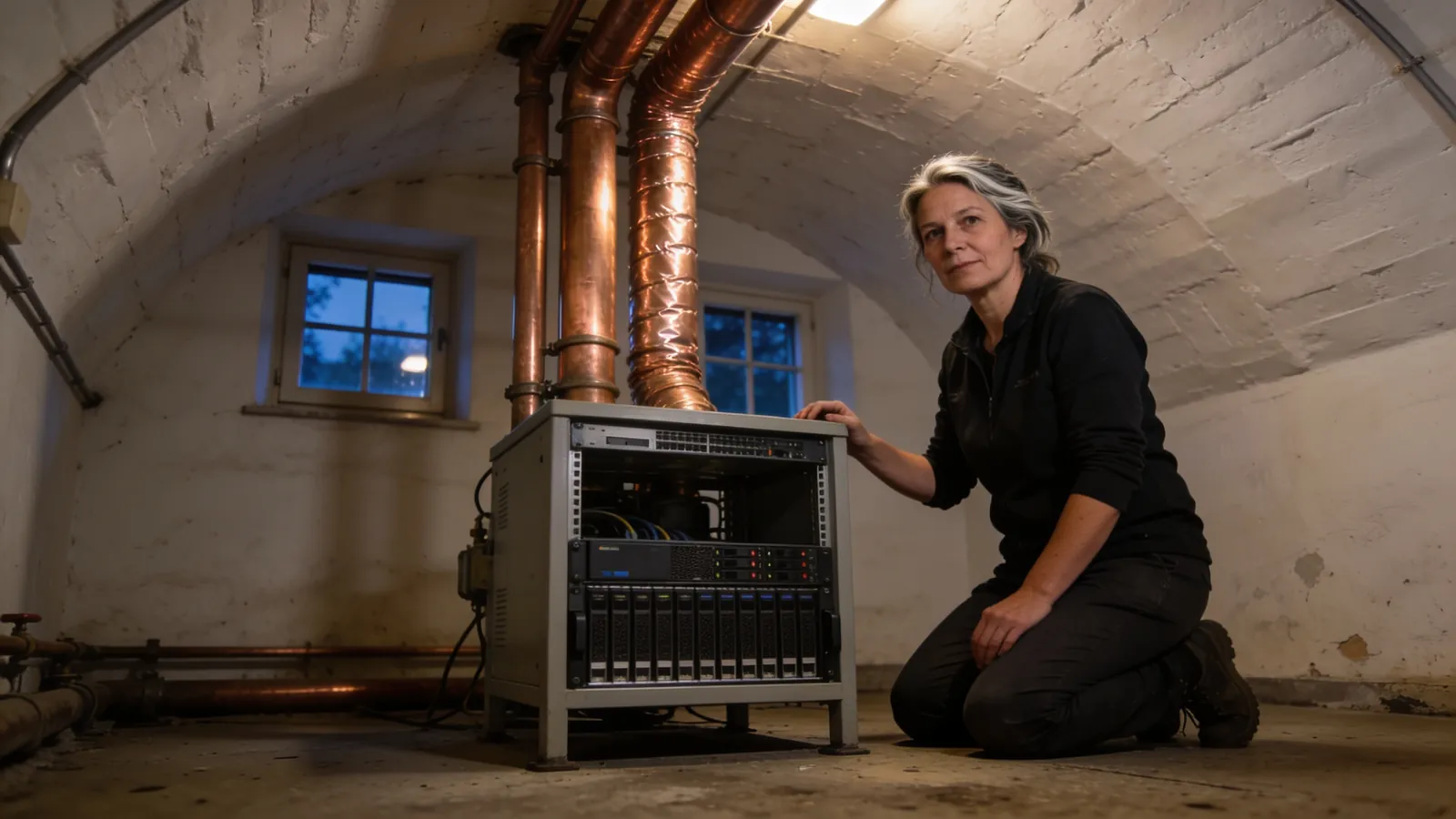
The main new idea concerns infrastructure. Austria is offering interested European states to develop, finance and use computing infrastructure together, according to the agenda. The proposed European Community for Computing Power would build on existing EU structures and funding vehicles rather than duplicate them. Pröll drew a parallel with the European Coal and Steel Community, the forerunner of the EU, brutkasten reported, and said Austria now wants to find partners across Europe.
At home, the agenda backs a data centre roadmap under the motto “small, green, decentralised”: several regional sites whose waste heat would be reused. A “Physical AI mission” for robotics and production systems would start by picking one application area with industry and research partners; projects and funding are still to be worked out.
What it offers founders
Young AI companies need first paying customers, and founders often struggle to find the right support among the many existing bodies, the paper says. One field of action therefore promises a continuous path from idea to market. Together with the research funding agency FFG, the federal development bank aws, the telecoms and media regulator RTR and Austria's EU-backed AI Factory, the government will examine whether a single point of contact could guide founders through funding, testing and market entry. Public bodies are meant to trial AI products as first customers, with paid pilot contracts where need, legal basis and funding are settled. The government wants to implement the regulatory sandboxes provided for in the EU's AI Act in an “innovation-friendly” way.
At EU level, Austria says it will “constructively” support work on EU Inc, the proposed pan-European company form. A start-up that wants to grow beyond Austria has to deal with different national company laws, Pröll said, according to brutkasten: “We have to change that.” On the same day, the EU-INC campaign and Startups for Europe called on the European Commission to withdraw and re-table the EU Inc proposal. Other items in the agenda include 1,000 additional AI workshops, a UN-backed AI centre in Vienna and a review of TikTok. In public administration, Austria already runs AI tools on open models from Mistral AI on its own servers, Trending Topics reported.
On computing power, Austria recently took a different line. Vienna, backed by the federal government, had positioned itself as a site for one of the EU's planned AI gigafactories. But Austria made no funding commitment, Trending Topics reported in August, citing Ö1, Austria's public radio station. According to the European Commission, the facilities are financed half by the EU and half by the host country; 18 countries committed, the outlet reported, and Vienna dropped out. The Greens criticised the strategy process in September: “No plan, no structure,” said Süleyman Zorba, the party's digital policy spokesman, according to Trending Topics (translated from German). More policy coverage is in the AI section.
Analysis
The European Community for Computing Power is the agenda's biggest idea and the one with the thinnest foundation. It is explicitly meant to build on existing EU funding vehicles. The best-known EU programme for large-scale computing, the AI gigafactories, requires the host country to cover half the cost, and Austria declined to make that commitment this summer. Potential partners therefore cannot tell what Austria itself would contribute; the paper names no budget.
For founders, the more tangible part sits further down the document. A single contact point across FFG, aws and the AI Factory, sandboxes under the AI Act and the state as a possible paying pilot customer target the two hurdles the paper itself names: support that is hard to find and a lack of first customers. None of that needs a new European institution, only coordination between bodies that already exist. Yet these items, too, are listed only for review. Two tests will decide whether the agenda becomes more than a discussion paper: whether the 2027 strategy names amounts, and whether a public body awards its first paid AI pilot contract before then.
The facts
- Austria's “Kipppunkt” AI agenda sets out 15 fields of action under three goals.
- It proposes a European Community for Computing Power built on existing EU structures.
- The agenda is open for public consultation; a full AI strategy is due in the first half of 2027.
- For founders: a review of a single contact point, AI Act sandboxes and the state as a possible first customer.
- The government has not published cost or funding figures.
Questions and answers
What is Austria's Kipppunkt AI agenda?
A draft for discussion published by the Austrian government on 19 November 2026, setting out 15 fields of action for AI policy. It is the basis for a coordinated national AI strategy due in the first half of 2027.
What is the European Community for Computing Power?
An Austrian proposal for interested EU countries to jointly develop, finance and use AI computing infrastructure, building on existing EU structures and funding vehicles. No partners or budget have been announced.
Did Austria bid for an EU AI gigafactory?
Vienna had positioned itself as a site, but Austria did not make the national co-funding commitment the EU required, Trending Topics reported in August 2026. Vienna therefore dropped out of the race.
Sources
- Bundeskanzleramt (KI-Agenda Kipppunkt): KI-Agenda: Österreichs Zukunft im KI-Zeitalter gestalten (politischer Diskussionsentwurf) (19 Nov 2026) primary source
- brutkasten: KI-Rede: Pröll schlägt Europäische Gemeinschaft für Rechenleistung vor (20 Nov 2026) independent source
- Trending Topics: Österreichs KI-Strategie wird erst 2027 fertig (19 Nov 2026) independent source
- Trending Topics: Wien verzichtet auf Bewerbung für AI Gigafactory (4 Aug 2026) independent source